
Components for the EPA Project
The electrification of the Danish railway network (the EPA project) began almost 10 years ago, and Engskov Maskinfabrik has soon taken part all around Denmark.
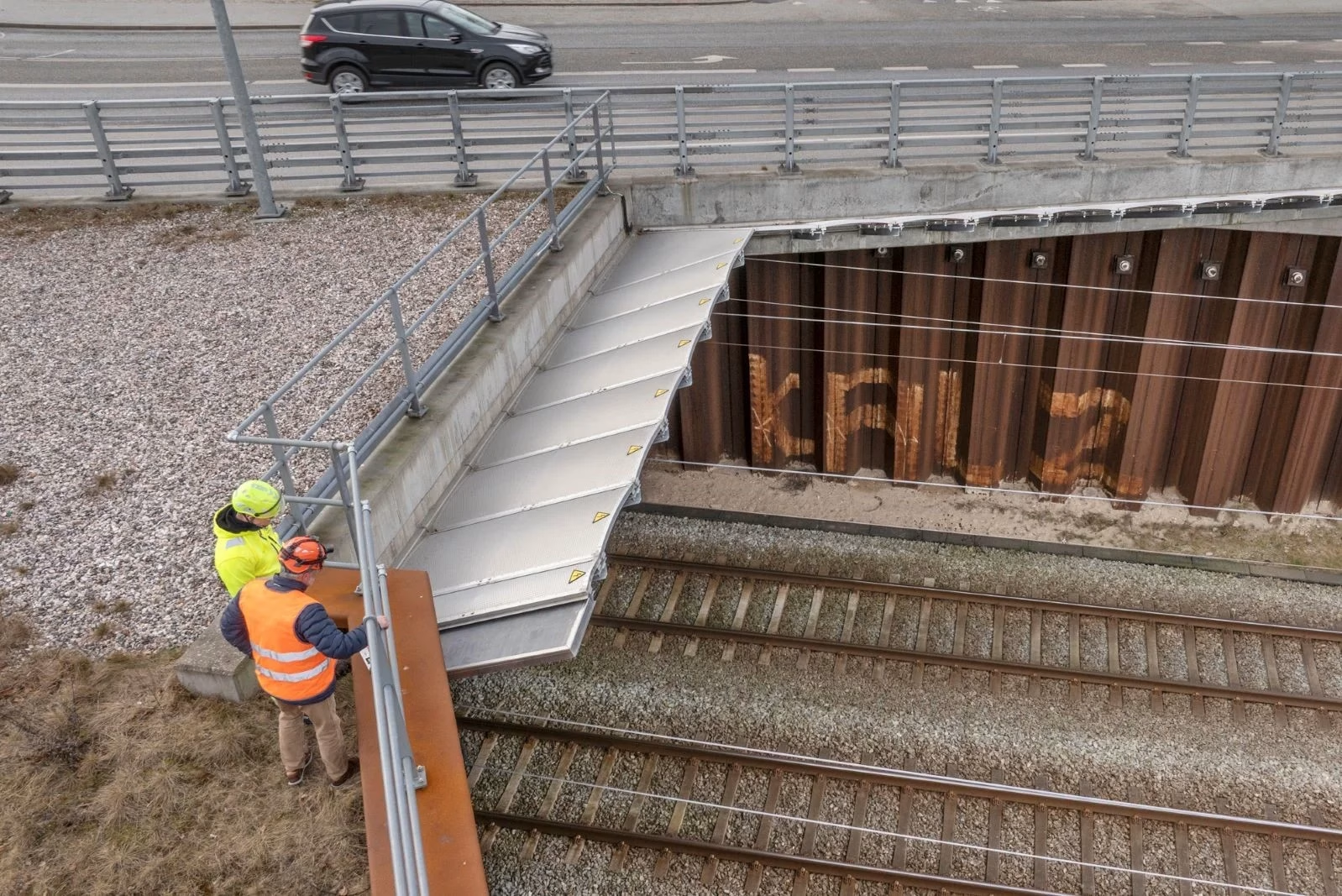
At the factory in Ringsted, protective canopies and protective screens are produced for use when new rail sections require shielding at bridges and crossings. In addition, backstays, cantilevers and other components for masts and overhead line suspension systems are produced.
Since 2015, Banedanmark Has Been Electrifying a Large Part of the State Railway Network
Since 2015, Banedanmark has been electrifying a large part of the state railway network, making it possible to transition from diesel-powered to electric trains on nearly all railway lines. Including double-track sections, a total of 1,300 kilometres of track is being electrified.
“Engskov Maskinfabrik has been involved since the beginning of the EPA project. By the time all sections are completed, the machine factory will have delivered a large number of components for this electrification throughout the country,” says Claus Würtz Andersen, Logistics Coordinator at Aarsleff.
A Strategic and Trusted Supplier
Claus Würtz Andersen is responsible for purchasing components for the consortium between Siemens and Aarsleff that is carrying out the EPA project. According to him, the cooperation with Engskov Maskinfabrik contributes to ensuring that the electrification is carried out efficiently and constructively – including under the many bridges and crossings that the railway lines pass through.
“Engskov Maskinfabrik is a strategically important supplier when it comes to securing bridges and crossings with protective canopies and protective screens. Every time the railway passes under a bridge, we must ensure that no one can access the high-voltage lines from above the bridge or from its sides. Over the years, we have developed the cooperation so that Engskov also often contributes with other components – for example backstays (mast bracing), cantilevers (brackets for K-suspension) and much more,” he explains.
Thorough, Skilled and Efficient
“On each section, there are many bridges, and no two are alike. That is why it is essential for us that Engskov Maskinfabrik is able to produce and deliver exactly what fits each individual bridge. At the same time, the machine factory has developed an efficient production setup with a strong focus on quality,” explains Claus Würtz Andersen.
“Now we have worked together for almost 10 years, and I can only conclude that all tasks are solved brilliantly. That demonstrates great care and competence, which I truly appreciate,” he says, emphasizing that it is also an advantage that Engskov Maskinfabrik’s team is all-round.
Engskov Maskinfabrik’s project department supplements the drawing material with its own precise measurements whenever required. And the factory’s own installation team is deployed when installations are special and complex.
Automation and Manual Control
It also helps Torben and his team that Engskov Maskinfabrik has invested in production equipment that helps make the many years of serial deliveries for the electrification project more automated and efficient:
For example, the protective canopies are produced in two stages on the robot-controlled welding-drilling-riveting station. First, aluminium profiles are welded together into a frame with feet, and then a perforated aluminium plate is pop-riveted onto the frame. These two tasks are handled by a robot that can both weld the frame in one operation and be reconfigured to drill and pop-rivet the plate onto the frame in another operation.
“Our experienced employees set up the robot with the program that matches the current delivery of protective canopies, and they check that the robot is working correctly. When a protective canopy is finished, the employees carry out internal quality control and inspect all welds. It is a matter of professional pride for us that external inspection should not discover errors that we ourselves could have seen and corrected,” says Torben Krøyer.
